
Heat vs. Ice for Joint Pain — What Actually Works and When
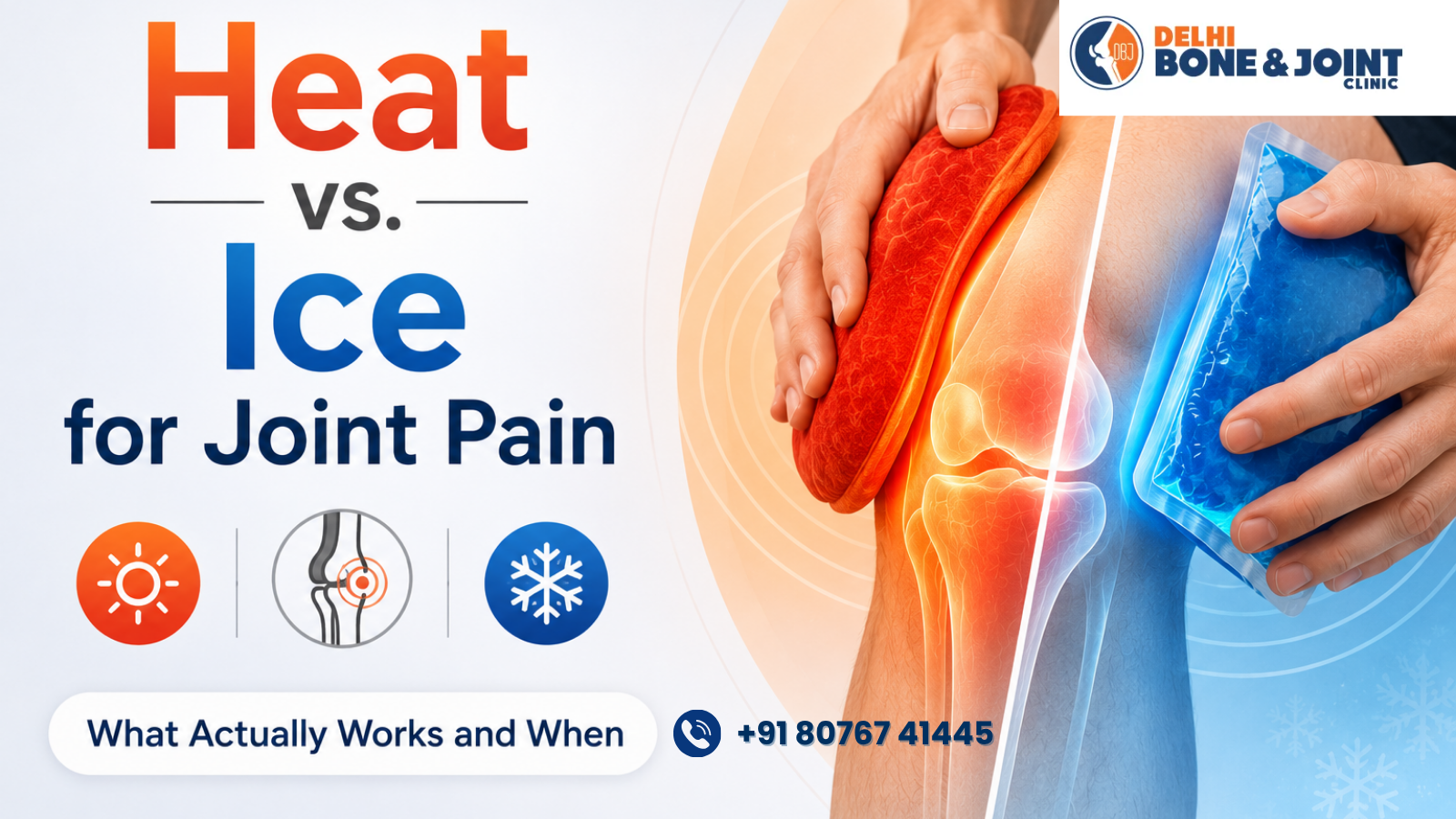
Heat vs. Ice for Joint Pain — What Actually Works and When
You've just twisted your knee stepping off the stairs. Or maybe your shoulder has been quietly aching for weeks. Your first instinct is to either grab an ice pack from the freezer or wrap a hot water bottle around the joint. But which one is actually right?
Most people guess. And most people guess wrong — at least some of the time.
Heat and ice are two of the oldest, most accessible pain relief tools available. Used correctly, they can dramatically ease discomfort and speed up recovery. Used incorrectly, they can make things significantly worse. Understanding the difference is not complicated — it just requires knowing what is happening inside your joint at any given moment.
Understanding Joint Pain First
Joint pain is not a single condition. It is a symptom with dozens of possible causes — injury, inflammation, arthritis, overuse, nerve involvement, and more. Before you reach for heat or ice, the more important question is: Is this pain acute or chronic?
Acute pain is new, sudden, and often caused by injury — a sprain, a fall, a sudden twist. The joint may be swollen, warm, and red.
Chronic pain is long-standing — weeks, months, or years of persistent aching, stiffness, and reduced mobility, as seen in osteoarthritis or rheumatoid arthritis.
This distinction is the foundation of the heat-versus-ice decision.
When Ice Wins — Acute Injuries and Active Inflammation
Ice is your best friend in the first 24 to 72 hours after an acute joint injury. Here is why: when you injure a joint, your body rushes blood and fluid to the area as part of the inflammatory response. This causes swelling, heat, and throbbing pain. Cold therapy — also called cryotherapy — constricts blood vessels, slows circulation to the area, numbs nerve endings, and reduces swelling.
Use ice when:
The injury just happened — a sprain, strain, or sudden joint trauma
The joint feels warm or hot to the touch
There is visible swelling or bruising
The pain is sharp and intense
You have had a recent joint injection or procedure
How to apply ice correctly: Never apply ice directly to skin. Wrap an ice pack or a bag of frozen peas in a thin cloth and apply it to the joint for 15–20 minutes at a time. Repeat every 2–3 hours during the first 48–72 hours. Longer application risks ice burns and nerve damage.
Patients across Janakpuri, Uttam Nagar, and Dwarka who experience a sudden joint injury should apply ice immediately and consult the best joint replacement surgeon in Janakpuri if pain, swelling, or instability persists beyond 48 hours.
When Heat Wins — Chronic Pain and Muscle Stiffness
Heat therapy works on an entirely different principle. Warmth dilates blood vessels, improves blood flow to the area, relaxes tight muscles and tendons, and reduces the stiffness that builds up in joints affected by chronic conditions like osteoarthritis.
Use heat when:
The joint feels stiff — especially first thing in the morning
You have chronic arthritis pain with no active swelling
Muscles around the joint are tight or in spasm
You are warming up before exercise or physical therapy
The pain is dull, deep, and persistent rather than sharp
How to apply heat correctly: Use a hot water bottle, heating pad, or warm towel. The temperature should feel comfortably warm — not burning. Apply for 15–20 minutes. Never sleep with a heating pad directly on skin, and avoid heat on open wounds, rashes, or areas with poor circulation.
Residents in areas like Vikas Puri, Tilak Nagar, and Janakpuri dealing with chronic knee or hip stiffness, often find that morning heat therapy significantly improves their mobility before daily activities begin.
The Grey Zone — When Neither Works Alone
Some conditions sit in between acute and chronic, or involve both inflammation and stiffness simultaneously. Rheumatoid arthritis, for example, can have active flares with warmth and swelling alongside chronic stiffness. In these cases:
During a flare: use ice to calm active inflammation
Between flares: use heat to manage stiffness and improve mobility
Contrast therapy — alternating between heat and ice — can benefit certain chronic conditions, but should only be done on medical advice.
If you are unsure which phase you are in, consulting the best joint specialist in Janakpuri removes the guesswork entirely and prevents you from accidentally worsening the condition.
Common Mistakes People Make
Applying heat to a fresh injury is the single most common error. It feels soothing, but it increases blood flow and worsens swelling in acute injuries — the opposite of what you need.
Applying ice to chronic stiffness can tighten muscles further and make joint mobility worse, especially in arthritic joints that are already stiff.
Leaving either on too long risks burns, nerve damage, or skin irritation. The 15–20 minute rule applies to both.
Ignoring persistent pain and relying entirely on heat or ice when there is a structural problem — a torn meniscus, damaged cartilage, or a deteriorating joint — is a mistake that can allow the condition to advance to a point where it is much harder to treat.
When Heat and Ice Are Not Enough
If your joint pain has lasted more than a few weeks, is worsening despite home care, limits your ability to walk or perform daily tasks, or is accompanied by significant swelling, locking, or instability, it is time to move beyond home remedies.
The best joint replacement surgeon in Janakpuri can evaluate whether your pain stems from a structural issue, degenerative joint disease, ligament damage, or another condition requiring targeted treatment — from physiotherapy and injections to surgical intervention in advanced cases.
Many patients across West Delhi delay seeking care, assuming joint pain is simply "part of getting older." In reality, early intervention — whether through guided physiotherapy, medication, or minimally invasive procedures — often prevents the need for surgery altogether.
A Simple Rule to Remember
Think of it this way: Ice for new, heat for old. Acute injuries need cold to calm the storm. Chronic conditions need warmth to loosen the stiffness. When in doubt, ice first — it is the safer default for the first 48 hours of any new joint pain episode.
And if neither is providing adequate relief within a week, that is your body telling you that something more than temperature therapy is needed.
Patients from Janakpuri, Raja Garden, and Punjabi Bagh looking for expert joint care can book a consultation with the best joint specialist in Janakpuri for a proper diagnosis and a treatment plan that actually matches their condition — not just their symptoms.
Conclusion: The Right Tool for the Right Moment
Heat and ice are powerful — but only when used correctly. They are not interchangeable, and they are not a substitute for proper medical care when the underlying cause of joint pain is structural or degenerative.
Know what your joint needs at each stage. Respect the 20-minute rule. And when your pain refuses to respond to home care, do not delay. Your joints carry you through every day of your life — they deserve more than guesswork.
FAQs
Q1. Can I alternate heat and ice for joint pain?
Yes, but only for chronic conditions between flares — never on a fresh acute injury. Always consult a specialist before starting contrast therapy.
Q2. How long should I apply ice or heat?
Limit each session to 15–20 minutes. A longer application can cause skin burns or nerve irritation.
Q3. Is heat good for arthritis pain?
Yes, for chronic stiffness and non-inflammatory phases. Avoid heat during active flares when the joint is already warm and swollen.
Q4. When should I see a doctor for joint pain?
If pain lasts more than 2 weeks, worsens, limits movement, or is accompanied by swelling and instability, seek specialist evaluation promptly.
Q5. Can ice make joint stiffness worse?
Yes. Applying ice to chronically stiff joints — especially arthritic ones — can tighten surrounding muscles and worsen morning stiffness.